
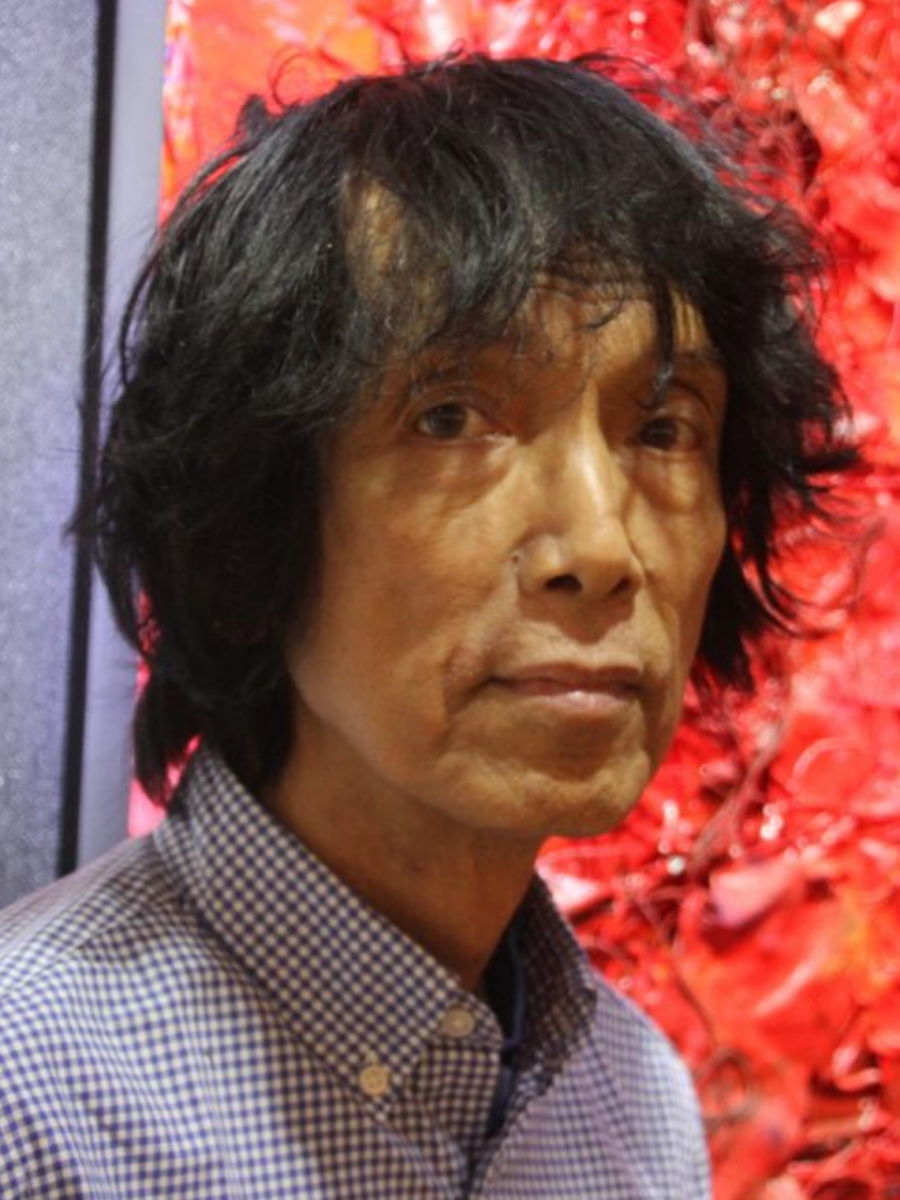
Oliver Kolay
Oliver Kolay is a Burmese-born contemporary artist whose life and work bridge the austere artistic environment of socialist Myanmar and the expressive freedom he discovered in the United States.
- Born
- 1960
- Nationality
- Myanmar
He learned to paint in the 1970s at the National School of Art in Yangon during the Socialist Republic of the Union of Burma under President Ne Win. This was a time of nationalization, severe poverty, and strict censorship, where even basic materials like canvases were unavailable. He recalls, “The nationalization of companies made them all poor… We didn’t even have any canvases, so we sourced cloth and made them ourselves”. He described his education as “very elementary”, and the stifling political climate led him to leave for the United States in 1985.
Arriving in the U.S. was a revelation; the freedom of the art he encountered allowed him to break from his previous realistic style. He developed a unique technique, moving away from traditional brushes to create his own tools, and pioneered an abstract collage method that lets colors and textures flow organically on the canvas, a process he describes as allowing “the expressions that nature creates flow”. His work, which often features swirling colors in abstract compositions, is sometimes described as “abstract expressionism”.
After three decades abroad, he returned to his homeland. He has held solo exhibitions like “Art Zone” and “Abstract Solo Art Exhibition”, often using his art to support fellow struggling artists and communities affected by natural disasters.
အိုလီဗာ ကိုလေး (Oliver Ko Lay) သည် မြန်မာနိုင်ငံဖွား ခေတ်ပြိုင်အနုပညာရှင်တစ်ဦးဖြစ်ပြီး ဆိုရှယ်လစ်ခေတ် မြန်မာနိုင်ငံ၏ တင်းကျပ်သော အနုပညာပတ်ဝန်းကျင်နှင့် အမေရိကန်ပြည်ထောင်စုတွင် တွေ့ရှိခဲ့သော လွတ်လပ်သော ဖန်တီးမှုတို့ကြားတွင် တံတားထိုးပေးသော အနုပညာရှင်တစ်ဦးဖြစ်သည်။
၁၉၇၀ ပြည့်လွန်နှစ်များတွင် ဗိုလ်ချုပ်နေဝင်း၏ ဆိုရှယ်လစ်အာဏာရှင်စနစ်လက်ထက် ရန်ကုန်အမျိုးသားအနုပညာကျောင်း၌ ပန်းချီပညာကို သင်ကြားခဲ့သည်။ ထိုခေတ်ကာလသည် နိုင်ငံပိုင်သိမ်းမှုများ၊ ပြင်းထန်သော ဆင်းရဲမွဲတေမှုနှင့် တင်းကျပ်သော ဆင်ဆာဖြတ်တောက်မှုတို့ကြောင့် ပန်းချီကားချပ်များပင် ရှားပါးသော အချိန်ကာလဖြစ်သည်။ ၎င်းက “ကုမ္ပဏီတွေ ပြည်သူပိုင်သိမ်းလိုက်တော့ လူတိုင်းဆင်းရဲကုန်တယ်… ပန်းချီကားချပ်တောင်မရှိလို့ အထည်တွေရှာပြီး ကိုယ်တိုင်လုပ်ခဲ့ရတယ်” ဟု ပြန်ပြောပြသည်။ သူ၏ ပညာသင်ကြားမှုကို “အရမ်းအခြေခံကျတယ်” ဟု ဖော်ပြခဲ့ပြီး ဤဖိနှိပ်ချုပ်ချယ်သော ခေတ်ကာလကို ကျော်လွှားကာ ပိုမိုလွတ်လပ်သော အနုပညာကို သင်ယူရန် မျှော်လင့်ချက်ဖြင့် ၁၉၈၅ ခုနှစ်တွင် အမေရိကန်ပြည်ထောင်စုသို့ ထွက်ခွာခဲ့သည်။
အမေရိကန်သို့ ရောက်ရှိခြင်းသည် သူ့အတွက် အလှည့်အပြောင်းတစ်ခုဖြစ်ခဲ့သည်။ ထိုနိုင်ငံ၏ လွတ်လပ်သော အနုပညာလောကသည် သူ၏ ယခင်လက်တွေ့ဆန်သော ပန်းချီပုံစံမှ ခွဲထွက်ရန် အခွင့်အလမ်းကို ပေးအပ်ခဲ့သည်။ သူသည် ရိုးရာစုတ်တံများကို စွန့်လွှတ်ကာ ကိုယ်ပိုင်ကိရိယာများကို ဖန်တီးအသုံးပြုခဲ့ပြီး၊ အရောင်များနှင့် အသွင်အပြင်များကို သဘာဝအတိုင်း စီးဆင်းစေသည့် ထူးခြားသော စိတ္တဇကော်လာချနည်းပညာကို တီထွင်ခဲ့သည်။ သူ၏ လက်ရာများကို “စိတ္တဇဖော်ပြမှုဝါဒ” အဖြစ် ဖော်ပြလေ့ရှိသည်။
ပြည်ပမှာ သုံးဆယ်ကျော်ကြာ နေထိုင်ပြီးနောက် မိခင်နိုင်ငံသို့ ပြန်လာခဲ့သည်။ ယခုအခါ “Art Zone” နှင့် “Abstract Solo Art Exhibition” ကဲ့သို့သော ကိုယ်ပိုင်ပြပွဲများကို ကျင်းပကာ အနုပညာရှင်ချင်းများနှင့် သဘာဝဘေးဒဏ်သင့် ဒေသများကို ကူညီရန် သူ၏ အနုပညာကို အသုံးပြုလေ့ရှိသည်။